



Controlling the Waterways
The 1805 Hog and Pond Law did not include measures for funding the drainage work, so very little progress was made. In 1822, a malaria outbreak affected one-fourth of the population, and more than 140 people died. Louisville was given the nickname “Graveyard of the West.”
The following year, 1823, the Jefferson Pond Drainage Company was formed with state funds to drain the ponds. Though there were improvements over the next several decades, problems continued to develop due to Louisville’s dramatic population growth.
In downtown Louisville, Beargrass Creek was also rerouted—from its original outflow near First Street, east to a neighborhood called “The Point.” The Beargrass Creek Cutoff was dug along Story Avenue, routing the creek directly to the Ohio River so it could bypass downtown.
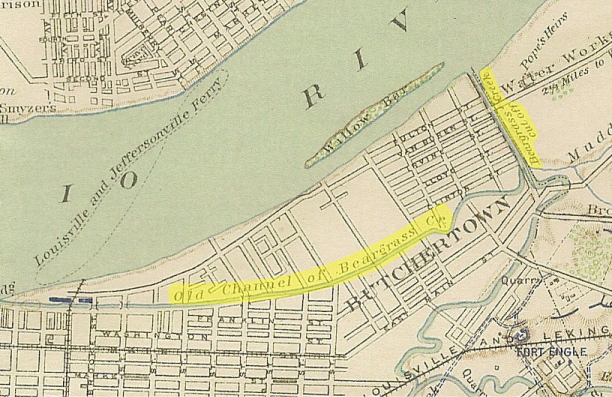
By the early twentieth century, the growing city of Louisville tried many things to tackle these problems, including the creation of the Commissioners of Sewerage, who oversaw the construction of new sewer lines for a brief period. Even after the commissioners went out of business, the city continued to take control of the waterways. They started by building underground sewer lines to carry wastewater away from residential and commercial areas. And, in addition to the sewer lines being built below ground, the city also developed an intricate system to manage the flow of the streams and waterways above ground.
In areas where creeks and ponds were stagnant, channels were dug to drain swampy areas and create a path to the Ohio River. Mill Creek is one of these waterways whose natural flow was rerouted. A new Mill Creek Cutoff channel was dug to drain this area and make the land more usable.
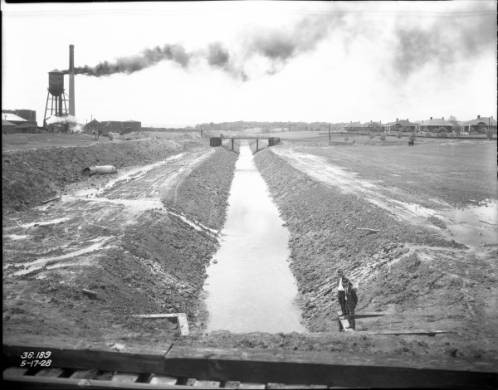
As society has advanced in Louisville over many decades, humans have made substantial changes to the natural waterways. While reshaping creeks and streams previously solved the problems of their day, these alterations often overlooked the needs of the natural world: the plants, animals and humans who would live here in the future.

