
Translate
- Afrikaans
- Albanian
- Arabic
- Armenian
- Azerbaijani
- Basque
- Belarusian
- Bengali
- Bosnian
- Bulgarian
- Catalan
- Cebuano
- Chinese (Simplified)
- Chinese (Traditional)
- Croatian
- Czech
- Danish
- Dutch
- English
- Esperanto
- Estonian
- Filipino
- Finnish
- French
- Galician
- Georgian
- German
- Greek
- Gujarati
- Haitian Creole
- Hausa
- Hebrew
- Hindi
- Hmong
- Hungarian
- Icelandic
- Igbo
- Indonesian
- Irish
- Italian
- Japanese
- Javanese
- Kannada
- Khmer
- Korean
- Lao
- Latin
- Latvian
- Lithuanian
- Macedonian
- Malay
- Maltese
- Maori
- Marathi
- Mongolian
- Nepali
- Norwegian
- Persian
- Polish
- Portuguese
- Punjabi
- Romanian
- Russian
- Serbian
- Slovak
- Slovenian
- Somali
- Spanish
- Swahili
- Swedish
- Tamil
- Telugu
- Thai
- Turkish
- Ukrainian
- Urdu
- Vietnamese
- Welsh
- Yiddish
- Yoruba
- Zulu


Menu
Search
Pond Creek Station Pumps Millions of Gallons of Water Per Minute as Flooding Continues
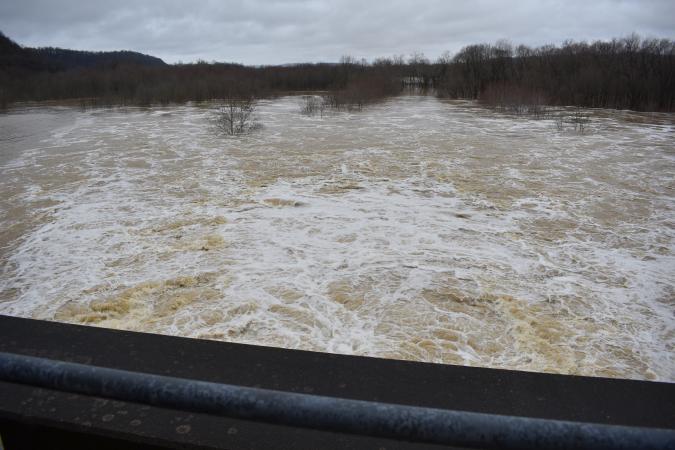
As the Ohio River’s banks continue to swell, MSD is hard at work to keep Louisville safe and clean. This effort is clear to see on days like today as the Ohio River floods its banks, particularly at major facilities like MSD’s Pond Creek Pumping Station.
Charged with flood protection for the city, the MSD system includes 29 miles of floodwall and earthen levee, 16 flood pumping stations, nearly 150 floodgates and 80 floodwall closures.
Stay Safe During Flooding
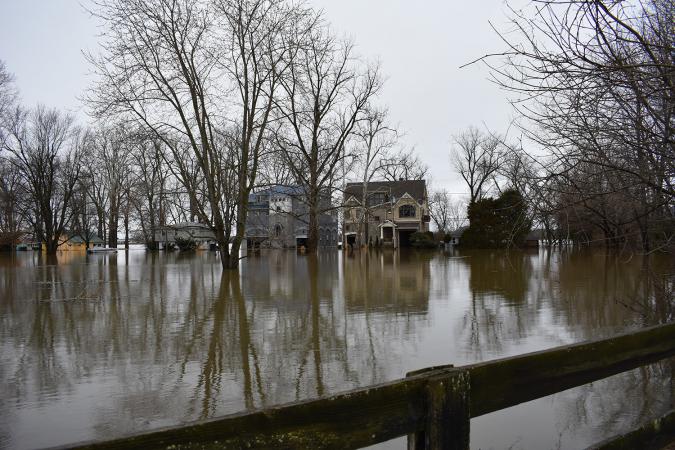
As heavy rain continues in the Louisville area, it’s important that people take precautions to stay safe. The National Weather Service (NWS) reports that each year, more deaths occur due to flooding than from any other thunderstorm-related hazard. Here are some key safety tips to keep in mind during wet weather.
Driving/Walking
Flood Response Updates - Feb. 26
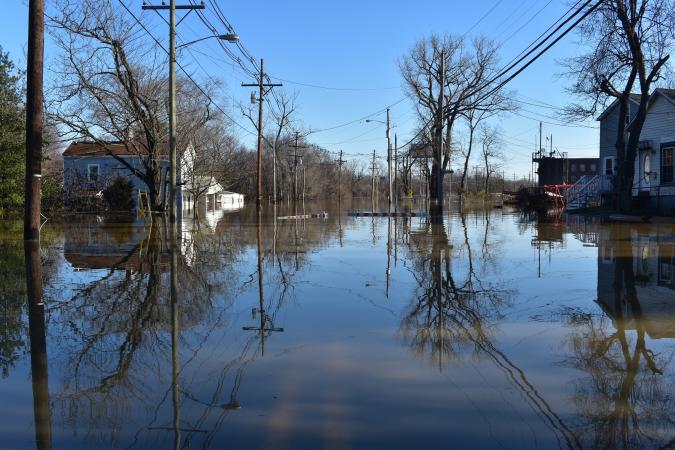
For the latest updates, follow MSD on Twitter at @LouisvilleMSD.
Customers can report to MSD any roadway flooding issues or sewer backups into homes 24/7/365: 502-587-0603 and CustomerRelations@LouisvilleMSD.org.
Flood Response Update - Feb. 26, 1 pm
MSD Rolls Out Online Job Portal MSDJobLink.org
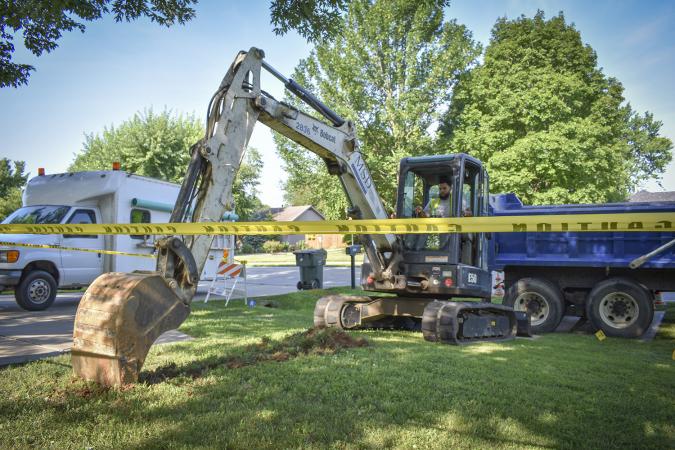
MSD has unveiled an online job portal to help connect local workers with contract holders. MSDJobLink.org launched January 24, during MSD’s “Can You Dig It?” outreach session with potential contractors, engineers, and goods and services providers.
“MSDJobLink.org is a portal for contractors to upload their job opportunities,” said MSD Procurement Manager Sharise Horne. “It is also a portal for individuals, area workforce development agencies and community organizations to upload resumes for view by MSD JobLink registered contractors.”
Waterway Protection Tunnel An Innovative Solution

The January 10 groundbreaking to the Waterway Protection Tunnel at 200 North 12th Street brought city officials and local stakeholders together to kick off a massive and innovative undertaking that will help maintain safe, clean waterways for Louisville and Jefferson County. The $200 million, 2.5-mile tunnel will be 18 stories underground and able to store up to 37 million gallons of combined rainwater and sewage. It is scheduled to be completed by December 31, 2020.
MSD Commits to Large Impact for Local Labor and Economy
The MSD Board has voted to change the threshold for MSD’s Local Labor Preference for construction contracts to include contracts of $5 million or more. Previously, MSD procurement regulations required a Local Labor Preference for construction contracts of $10 million or more.
“Local labor” is defined as individuals who have a primary legal residence within Bullitt, Henry, Jefferson, Meade, Nelson, Oldham, Shelby, Spencer and Trimble counties in Kentucky; and, Clark, Floyd, Harrison and Washington counties in Indiana.
Ribbon-Cutting Ceremony Conducted for Logan Street CSO Basin
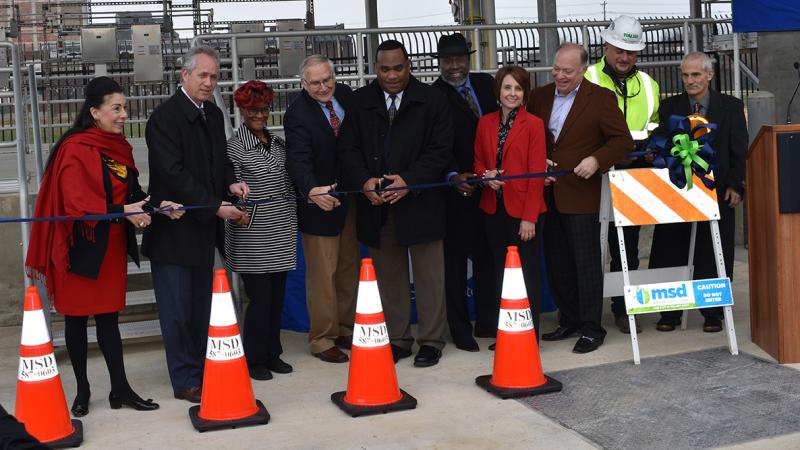
The ribbon-cutting ceremony for the Logan Street Combined Sewer Overflow (CSO) Basin on December 19 capped several years of work and community conversation that will now help maintain safer, cleaner waterways.
MSD Executive Director Tony Parrott said in opening remarks that the basin will capture 11 combined sewer overflow points that discharge 15,400,000 gallons of a mixture of sewage and rainwater in a typical rainfall year into the South Fork of Beargrass Creek. The basin will allow capture of these overflows.
MSD Executive Director Discusses Green Space in West Louisville

A Louisville MSD effort to deal with homes in flood-prone areas in Jefferson County could now become part of a planned revitalization of West Louisville. MSD Executive Director Tony Parrott spoke Tuesday during a community meeting at the Chestnut Street Family YMCA focused on progress concerning the Republic Bank Foundation YMCA and Passport Health and Well-Being campus planned for West Louisville.
Historic Cobblestones Unearthed During MSD Construction
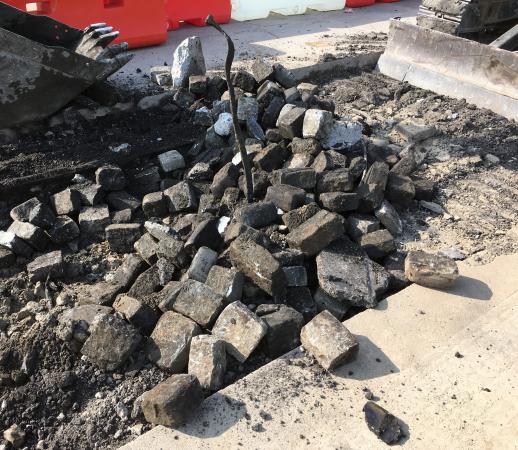
An MSD construction project designed to reduce combined sewer overflows offered a surprising return as it unearthed a forgotten piece of Louisville history now to be used as a building block for a future project in the city.
A shocking way to study stream health: MSD and electro-fishing
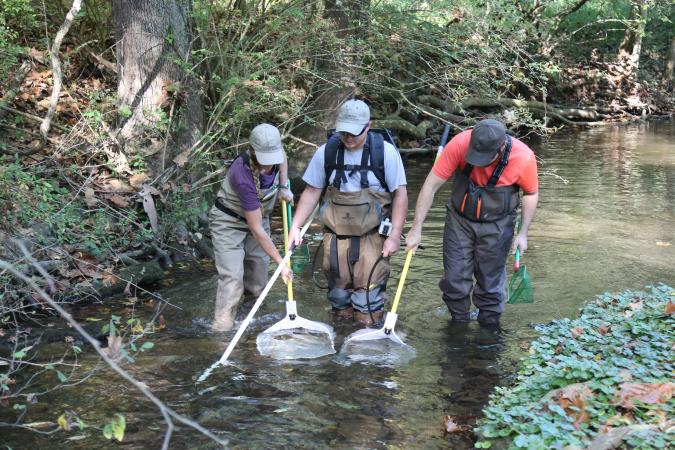
Rainfall. Temperature. Man-made pollutants. Numerous factors can affect the life of a stream, which means Louisville MSD must utilize a variety of tools to understand stream health and water quality as part of its mission to ensure safe, clean waterways.
One such method is a scientific survey method known as electro-fishing, as part of its efforts to collect biological data about streams in the Louisville Metro area. Fish, along with other biological data, provides insight on local stream health. The process involves using electricity to stun fish before they are caught.

