


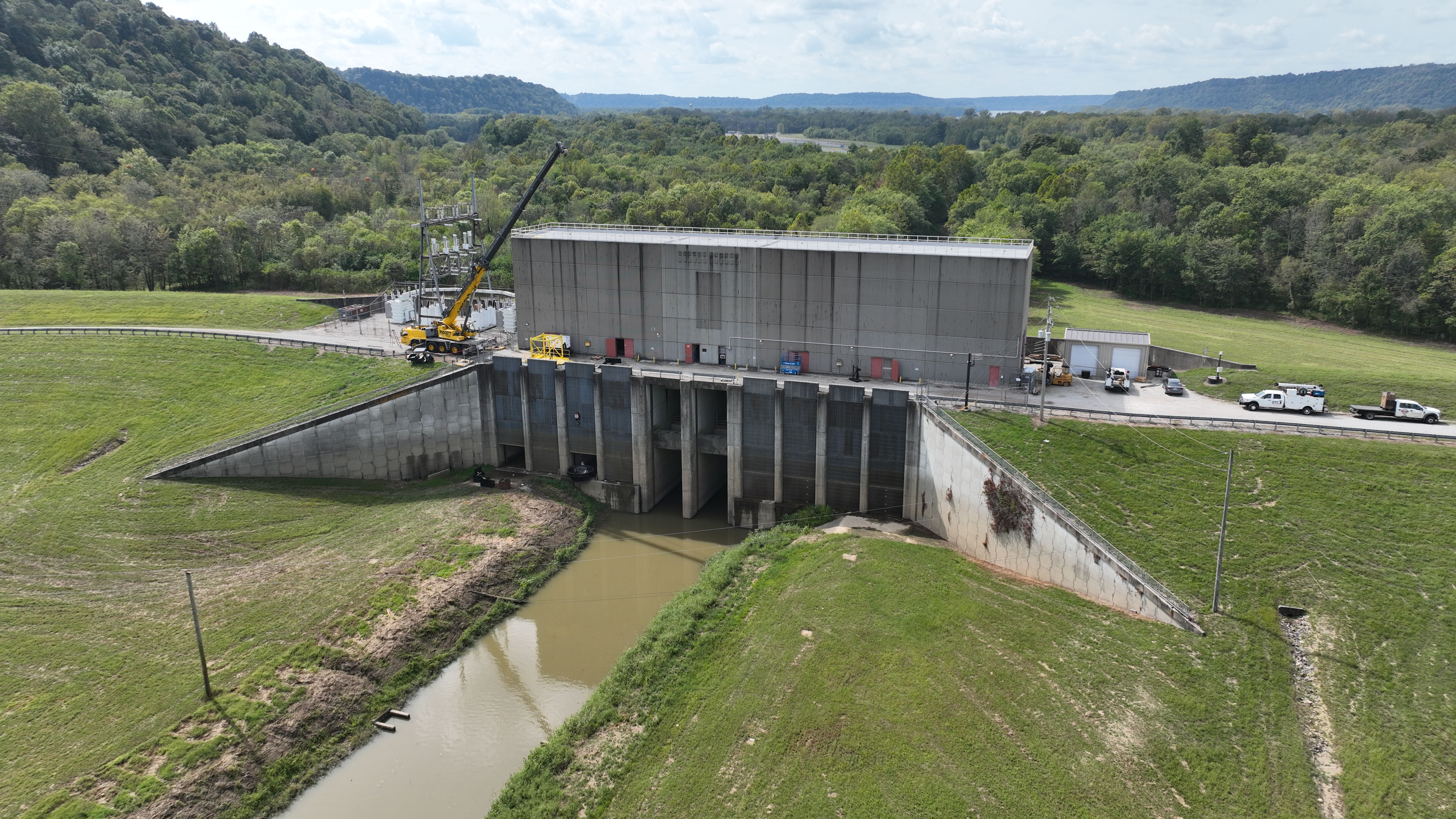
Repaired pump parts were returned to Pond Creek Flood Pump Station this past fall after sustaining damage during significant flooding in April of 2025. MSD’s 16 flood pump stations pumped more than 12.1 billion gallons during that flood event.
FY 27 Rate Increase Frequently Asked Questions
The board of the Louisville and Jefferson County Metropolitan Sewer District (MSD) approved a measured rate increase on July 27 to support continued investment in infrastructure that protects public health, waterways, neighborhoods and flood resilience across the community. Below is a list of frequently asked questions about the rate increase. The following information covers the fiscal year 2027 rate increase, which is:
- 3.9 percent in Jefferson County for residential wastewater, stormwater, and flood protection, and
- 2 percent in Oldham County for wastewater services.
How much will my monthly bill increase?
Jefferson County: The average monthly residential bill is expected to increase by an estimated $3.23 beginning September 1, 2026. The 3.9 percent increase is the same as last year’s rate change, which marked the lowest rate increase of the past 20 years.
Oldham County: The average monthly residential wastewater bill is expected to increase by an estimated $1.59 beginning September 1, 2026.
Why is the Oldham County rate increase so different from Jefferson County?
MSD is operating under a previously approved rate schedule set forth by the Oldham County Fiscal Court when it managed wastewater services in the county, prior to MSD’s taking on Oldham County wastewater management in 2020. Oldham County rates are currently higher than Jefferson County, and that long-term rate schedule will eventually equalize with that of Jefferson County.
Why does MSD need to increase rates, and how does it benefit our community?
MSD provides three utility services — wastewater treatment, stormwater management and Ohio River flood protection — and each is critical to the community’s health and safety.
Significant investment into aging infrastructure, some of which was built before the Civil War, is needed to continue to protect the community from system failures, hazardous sewer overflows and catastrophic flooding, as well as to ensure compliance with federal and state environmental standards.
We’re guided by our motto of providing safe, clean waterways for our community. Our mission is to protect the environment and ensure everyone enjoys area rivers and streams for generations to come. Investing in projects that lead to healthy waterways protects the future of those relaxing days spent fishing or floating on a kayak.
What does MSD do to minimize rate increases?
Providing three utility services under one organization helps maximize cost-effectiveness. MSD’s budget reflects continued financial discipline and cost-management efforts designed to minimize rate increases. These include:
- Despite significant cost increases, such as fuel (up 40%) and medical insurance (up 16%), the $512.7 million budget to operate and maintain existing facilities and services increased just 3.7 percent
- Elimination of 36 positions across the organization
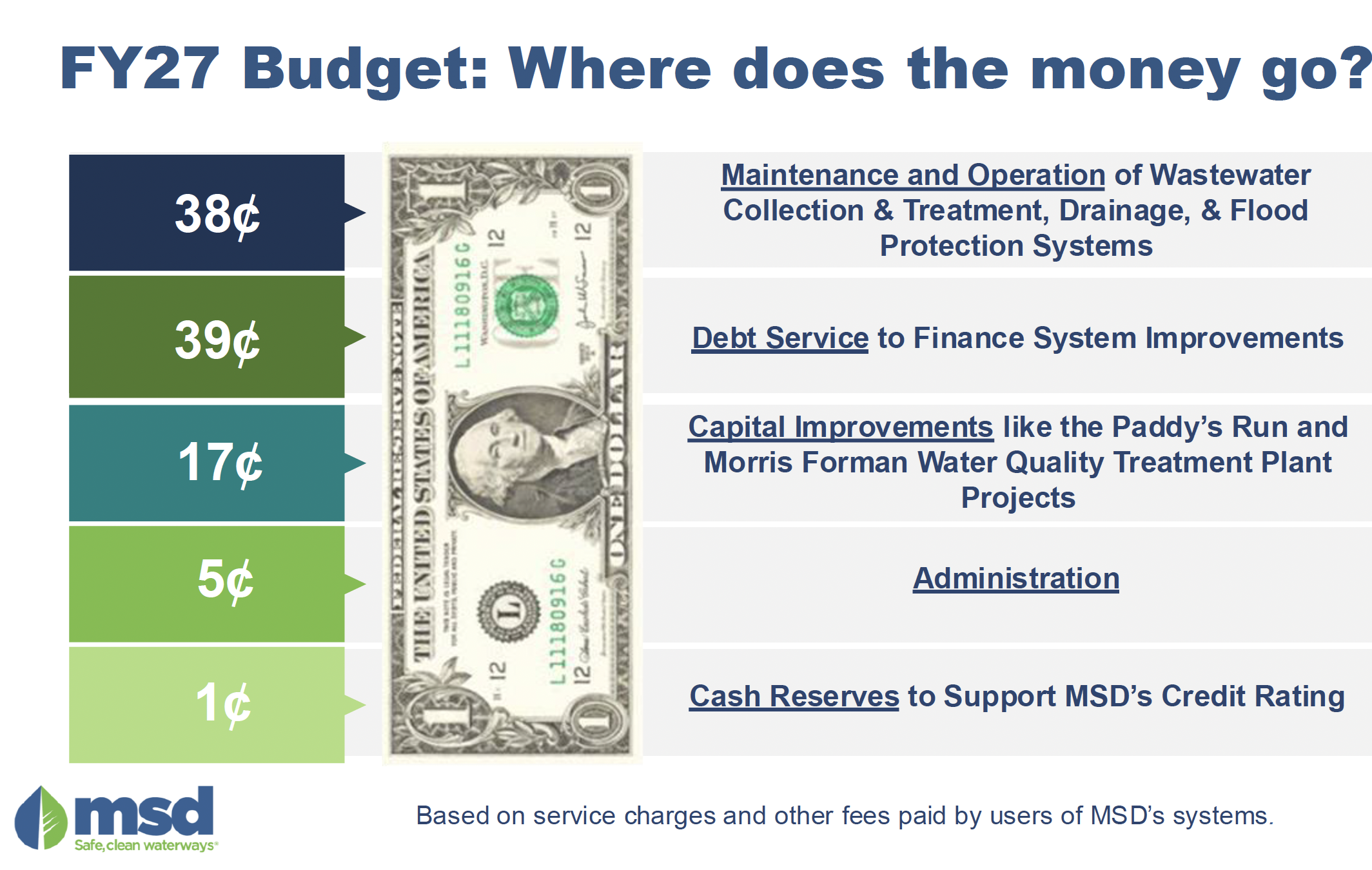
- Minimizing administrative costs, representing only 5 cents of every dollar spent
- Expanding use of grants, low-interest loans and alternative funding sources – including more than $250 million in secured grants, forgivable loans and low-interest financing for critical infrastructure projects over the next five years
- Increased emphasis on “pay-as-you-go” funding (from 5 percent in 2015 to 22% this year) to support long-term affordability and limit the growth of outstanding debt
Does MSD have assistance programs?
Yes! MSD provides rate assistance for more than 10,000 customers each year. It’s now easier than ever to apply. MSD partners with Louisville Water on the Drops of Kindness program to offer a range of programs to fit your needs. To learn more, visit www.dropsofkindness.com.
How is the money spent?
MSD’s rates reflect each customer’s share in the health, safety and protection of waterways that are the backbone of our community’s quality of life.
Where are MSD’s projects located?
MSD completes various projects across the communities we serve. These projects focus on improving our delivery of wastewater, stormwater management, and flood protection services for Jefferson County and wastewater services for Bullitt and Oldham counties. Check out the interactive map below to explore current projects and learn more.
Major construction projects this year include:
- Significant upgrades at the Paddy’s Run Flood Pumping Station to double flood-pumping capacity
- Planning for a new underground storage solution to prevent sewer overflows along the Upper Middle Fork of Beargrass Creek
- Continuing construction of the new biosolids processing facility at the Morris Forman Water Quality Treatment Center to increase efficiency and reduce odor at the community’s largest treatment facility
- Dozens of drainage improvement projects throughout the community
- Continued odor-mitigation investments, including replacement of 69 outdated catch basins. When complete, MSD will have replaced 411 catch basins across eight neighborhoods. Since 2023, MSD has invested more than $185 million in odor mitigation and related system improvements, contributing to a 50% reduction in odor-related customer service requests.
Can MSD do fewer projects or postpone them to reduce rates?
87% of our capital budget goes to projects required to keep our community in compliance with clean water standards and sewer overflow reduction requirements of the federal government. The required work and subsequent rate increases are dictated based on projects required by the EPA, Commonwealth of Kentucky, Air Pollution Control District and other regulatory bodies. Not completing these projects on time results in fines and penalties that ultimately would cause rates to increase.
What does the “Infrastructure Surcharge” on my bill mean?
Under the “MSD Charges” section on customer bills, what was formerly titled the “Consent Decree Surcharge” is now called the “Infrastructure Surcharge.” This is not a new charge, only a name change. The change will appear on any bill issued after September 1, 2026. Infrastructure Charge is a more common name among utilities and makes it clear that the fee funds infrastructure that supports a more reliable, efficient and environmentally sound wastewater and drainage system.
How do MSD rates compare to other cities?
Louisville wastewater rates are on par with similar large communities like Atlanta and St. Louis. The Cleveland area is nearly 20% greater than that of Louisville and Kansas City is nearly 40% higher.
Compared to 91 other utilities nationally, MSD’s budget spends 12% less on operations and maintenance, while investing 8% more in capital improvements to the system. (source: NACWA Triennial Survey)

