
Translate
- Afrikaans
- Albanian
- Arabic
- Armenian
- Azerbaijani
- Basque
- Belarusian
- Bengali
- Bosnian
- Bulgarian
- Catalan
- Cebuano
- Chinese (Simplified)
- Chinese (Traditional)
- Croatian
- Czech
- Danish
- Dutch
- English
- Esperanto
- Estonian
- Filipino
- Finnish
- French
- Galician
- Georgian
- German
- Greek
- Gujarati
- Haitian Creole
- Hausa
- Hebrew
- Hindi
- Hmong
- Hungarian
- Icelandic
- Igbo
- Indonesian
- Irish
- Italian
- Japanese
- Javanese
- Kannada
- Khmer
- Korean
- Lao
- Latin
- Latvian
- Lithuanian
- Macedonian
- Malay
- Maltese
- Maori
- Marathi
- Mongolian
- Nepali
- Norwegian
- Persian
- Polish
- Portuguese
- Punjabi
- Romanian
- Russian
- Serbian
- Slovak
- Slovenian
- Somali
- Spanish
- Swahili
- Swedish
- Tamil
- Telugu
- Thai
- Turkish
- Ukrainian
- Urdu
- Vietnamese
- Welsh
- Yiddish
- Yoruba
- Zulu


Menu
Search
“Can You Dig it?” session to outline $250 million in MSD projects for 2017
MSD Procurement and Supplier Diversity will host session for contractors, engineers, goods and service providers
Louisville MSD will host its second annual "Can You Dig It?" outreach session to educate potential contractors, engineers as well as goods and services providers, on $250 million worth of capital construction projects and other contract opportunities planned for 2017.
Critical Repair and Reinvestment Plan in the news

Courier-Journal reporter James Bruggers has covered MSD’s Critical Repair and Reinvestment Initiative, a 20-Year Comprehensive Facility Plan that presents an extensive analysis of the wastewater, stormwater and flood protection systems that protect the community. This plan was released to the public in draft form on Tuesday, January 17, and MSD will be seeking public comment until 5 PM on March 1, 2017.
MSD Seeks Community Dialogue on Investing in Public Health and Safety Protection
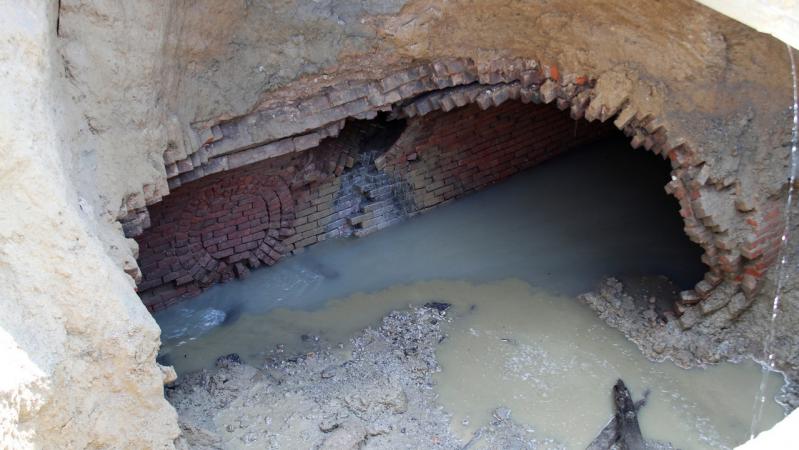
Louisville MSD has completed an extensive analysis of the wastewater, stormwater and flood protection systems that protect the community. Now, MSD wants to talk directly with the public about the risks, the solutions, and most importantly how soon the work will begin.
MSD employees plant trees along Cedar Creek
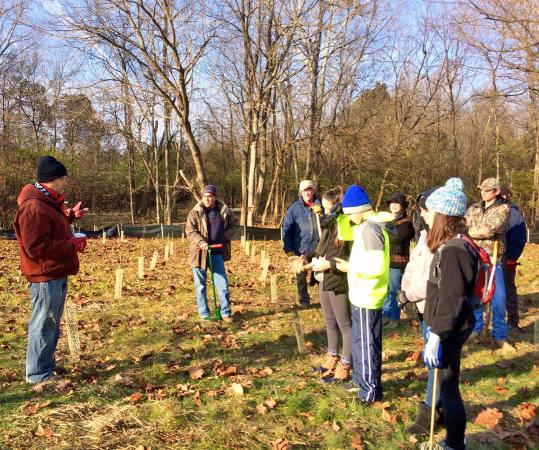
On Saturday, December 10, 2016, MSD's Wes Sydnor and Erin Wagoner, in partnership with the Salt River Watershed Watch and volunteers from Manual High School, planted over 200 native sapling trees, shrubs and grasses along the banks and floodplain of Cedar Creek.
The flood-prone property, located along Bartley Drive, was purchased by MSD through a FEMA grant. Over time, the sapling trees will grow and create a forested stream buffer along the creek. This stream buffer will improve health by filtering out pollutants, providing habitat, and lowering stream temperature.
MSD breaks ground on Shawnee Park Basin Project

MSD and its community partners broke ground on the $60 million Shawnee Park Basin Project on December 6. This project is key to reducing sewer overflows into the Ohio River. At the same time, MSD is committed to preserving the historic nature of Shawnee Park. The basin – which will be largely invisible to the public when completed – will be constructed under a portion of the Great Lawn in Shawnee Park.
Maintaining our commitment to flood protection

On November 29, MSD tested a portion of the Louisville Metro Flood Protection System as a preventative measure that is required by the U.S. Army Corps of Engineers. The floodwall closure near Slugger Field extends along an entire city block of Main Street, from Jackson Street to the entrance of the Slugger Field parking lot.
Maple Street flood mitigation

Most of the homes in the Maple Street Flood Mitigation Project area were built—early in the 1900s—where a stream once existed. The project area is situated in a highly urbanized, heavily impervious setting, which has repeatedly experienced serious flooding during heavy rainstorms.

